
Ops Playbook
CT Scanner Site Preparation Guide: What You Need Before Installation
April 13, 2026 · 6 min · Medical Imaging Specialists
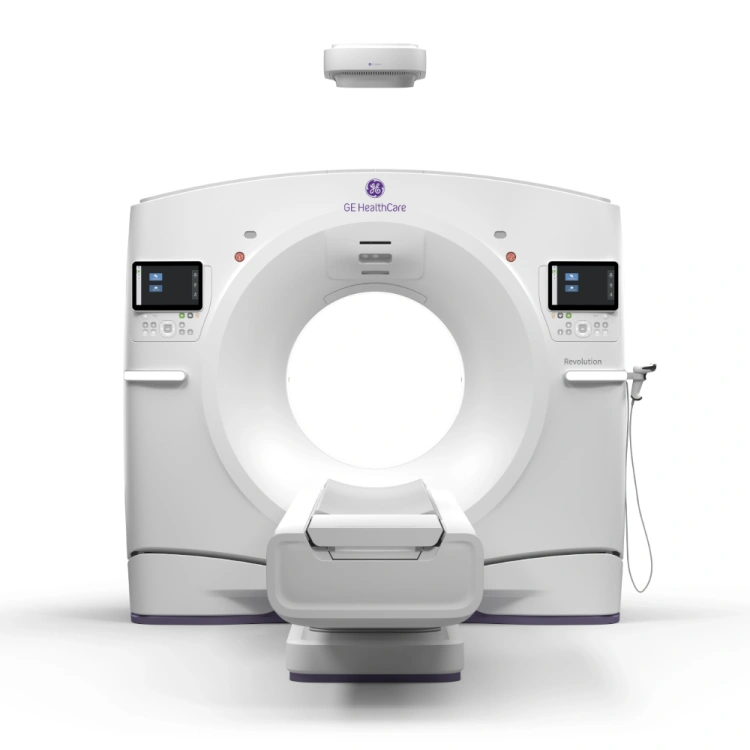
Practical considerations, risk points, and what to ask before you buy, service, move, or maintain imaging equipment.
Installing a CT scanner — whether new or refurbished — is one of the biggest capital investments a clinic, hospital, or imaging center will make. But the scanner itself is only part of the equation. Without proper site preparation, you risk costly delays, failed inspections, and equipment that doesn’t perform to spec from day one.
This guide walks you through every critical element of CT scanner site preparation so you can plan ahead, avoid surprises, and get your system operational as quickly as possible.
Why CT Scanner Site Preparation Matters
A CT scanner isn’t a plug-and-play device. It requires specific environmental conditions to operate safely and reliably. Inadequate site prep is one of the most common reasons imaging projects go over budget or miss their go-live dates.
Getting the site right before the equipment arrives means:
- Faster installation timelines — rigging crews and engineers aren’t waiting on construction
- Fewer change orders — contractors know exactly what’s needed upfront
- Better equipment performance — proper power, cooling, and shielding extend the life of your system
- Regulatory compliance — state radiation safety and building codes are met from the start
Whether you’re building out a new suite or retrofitting an existing room, the fundamentals are the same.
Room Dimensions and Layout
Every CT scanner model has specific room size requirements published in the manufacturer’s pre-installation guide. As a general rule, plan for a minimum scan room of approximately 20 feet by 16 feet, though compact models designed for outpatient or urgent care settings may work in slightly smaller footprints.
Key layout considerations include:
- Gantry clearance — enough space around the gantry for patient access, stretcher entry, and service access panels
- Control room — typically adjacent with a lead-glass window for direct line of sight to the patient
- Equipment room — houses the computer cabinet, power distribution unit, and sometimes the chiller; this room needs its own HVAC and access for service engineers
- Patient workflow — think about how patients enter, change, wait, and move through the space
Request the pre-installation manual from your equipment vendor early. It contains exact dimensions, weight maps, and utility routing diagrams specific to your scanner model.
Structural and Floor Loading Requirements
CT scanners are heavy. A typical system — gantry, patient table, and associated hardware — weighs between 4,000 and 8,000 pounds depending on the model. The gantry alone often exceeds 4,000 pounds concentrated on a relatively small footprint.
Your structural engineer needs to verify:
- Floor load capacity — the slab must handle both the static weight of the system and dynamic loads during operation
- Vibration isolation — CT scanners are sensitive to vibration; nearby heavy equipment, traffic, or even HVAC compressors can degrade image quality
- Rigging path — how will the gantry get into the room? Doorways, hallways, elevators, and exterior walls all need to be evaluated for width, height, and weight limits
If you’re on an upper floor, a structural assessment is non-negotiable. Ground-level installations on a concrete slab are simpler, but still require engineering sign-off.
Electrical Requirements
CT scanners have significant power demands. Most systems require a dedicated electrical service that includes:
- Dedicated transformer — many CTs need a 480V, 3-phase power supply with a dedicated isolation transformer
- Uninterruptible power — while a full UPS for the scanner itself is uncommon, the computer systems and reconstruction engines may require conditioned or UPS-backed power
- Dedicated circuits — the scanner, chiller, and HVAC for the equipment room each need their own circuits
- Grounding — proper grounding is critical for image quality and patient safety; follow the manufacturer’s grounding specifications exactly
Work with your electrician and the equipment vendor’s pre-installation team simultaneously. Electrical work is often the longest lead-time item in site prep, and errors here cause the most expensive delays.
HVAC and Cooling
CT scanners generate substantial heat, particularly the X-ray tube and the reconstruction computers. The equipment room and scan room both require dedicated climate control.
Plan for:
- Equipment room cooling — this room may need its own dedicated HVAC unit capable of removing 15,000 to 40,000+ BTUs depending on the system
- Scan room temperature — typically maintained between 64°F and 75°F with controlled humidity (20–80% non-condensing)
- Chilled water or air-cooled chiller — many CT systems use a chiller to cool the X-ray tube; some are air-cooled (requiring exterior placement with proper clearance), while others use facility chilled water
Inadequate cooling is a leading cause of premature X-ray tube failure and system downtime. This is not an area to cut corners.
Radiation Shielding
CT scanners produce ionizing radiation, and every installation requires a radiation shielding plan designed by a qualified medical physicist. The shielding plan dictates:
- Lead thickness in walls, floors, and ceilings surrounding the scan room
- Lead-lined door specifications and interlocks
- Lead-glass window between the scan room and control room
- Any additional shielding based on adjacent occupied spaces (offices, waiting rooms, public corridors)
The shielding plan must be submitted to your state radiation control program for approval before construction begins. This process can take weeks, so start early. Your equipment vendor should be able to provide the radiation output data the physicist needs to complete the calculations.
IT and Network Infrastructure
Modern CT scanners are networked devices. Your IT infrastructure needs to support:
- DICOM connectivity — connection to your PACS for image storage and retrieval
- RIS/HIS integration — worklist and patient demographic feeds
- Remote diagnostics — most manufacturers offer remote service capabilities that require a secure network connection (VPN or dedicated line)
- Network drops — at least two dedicated Ethernet drops in the equipment room and one in the control room
Coordinate with your IT team and the equipment vendor’s applications team to configure network settings, DICOM AE titles, and firewall rules before installation day.
Permitting and Regulatory Compliance
Depending on your location, you may need:
- Building permits for construction and electrical work
- State radiation machine registration — required before you can scan patients
- Radiation shielding approval from your state’s radiation control program
- Certificate of Need (CON) — some states require CON approval before adding imaging equipment
- Accreditation planning — if you’re seeking ACR accreditation, factor in the timeline and technical requirements early
Don’t underestimate the regulatory timeline. Some states take 60 to 90 days for radiation shielding reviews alone.
Working With Your Equipment Vendor on Site Prep
The best equipment vendors don’t just sell you a scanner — they help you plan the entire project. When evaluating a vendor, ask:
- Do they provide the pre-installation guide and site planning assistance?
- Will they conduct a site survey before delivery?
- Do they coordinate with your contractor, electrician, and physicist?
- What’s included in their installation scope versus what falls on you?
A vendor that’s been through hundreds of installations can spot problems your general contractor might miss. That experience is worth its weight in lead shielding.
Plan Early, Install Smoothly
CT scanner site preparation isn’t glamorous, but it’s the foundation of a successful imaging project. Start your site planning at least three to six months before your target go-live date — longer if construction or regulatory approvals are involved.
The earlier you identify requirements, the fewer surprises you’ll face on installation day.
Ready to plan your next CT scanner installation? Medical Imaging Specialists provides full project support — from system selection and site planning to delivery, installation, and ongoing service. With over 20 years of experience installing refurbished CT, MRI, and PET/CT systems across the US, Caribbean, and Latin America, we help you get it right the first time. Contact Medical Imaging Specialists today to discuss your project.
Related Reading
- Read next: Medical Imaging Equipment Deinstall Shipping Installation
- Read next: Maximize Uptime Refurbished Imaging Equipment
Talk Through Your Next Imaging Project
If you are evaluating refurbished imaging equipment, planning a service strategy, or trying to keep an aging scanner productive, Medical Imaging Specialists can help. Contact MIS through the website and tell us what system you are working with.
Need help with this exact problem?
Send the modality, site location, timeline, and any system details. MIS will route the request by intent.
Related resources
Ops Playbook
What Site Requirements Are Needed for a CT Scanner?
CT scanner site requirements include room fit, power, cooling, shielding review, access, IT, service clearance, and project planning.
Ops Playbook
How Long Does CT Scanner Installation Take? Planning Guide
CT scanner installation timing depends on site readiness, rigging, power, cooling, shielding review, IT, service support, and project scope.
Ops Playbook
How Quickly Can a CT Scanner Be Repaired After Downtime?
CT repair speed depends on diagnosis, parts, access, service history, and site readiness. Learn what helps a scanner get back online faster.