
Buyer's Desk
GE vs. Siemens vs. Philips Refurbished MRI Scanner: Which Brand Is Right for Your Facility?
April 7, 2026 · 6 min · Medical Imaging Specialists
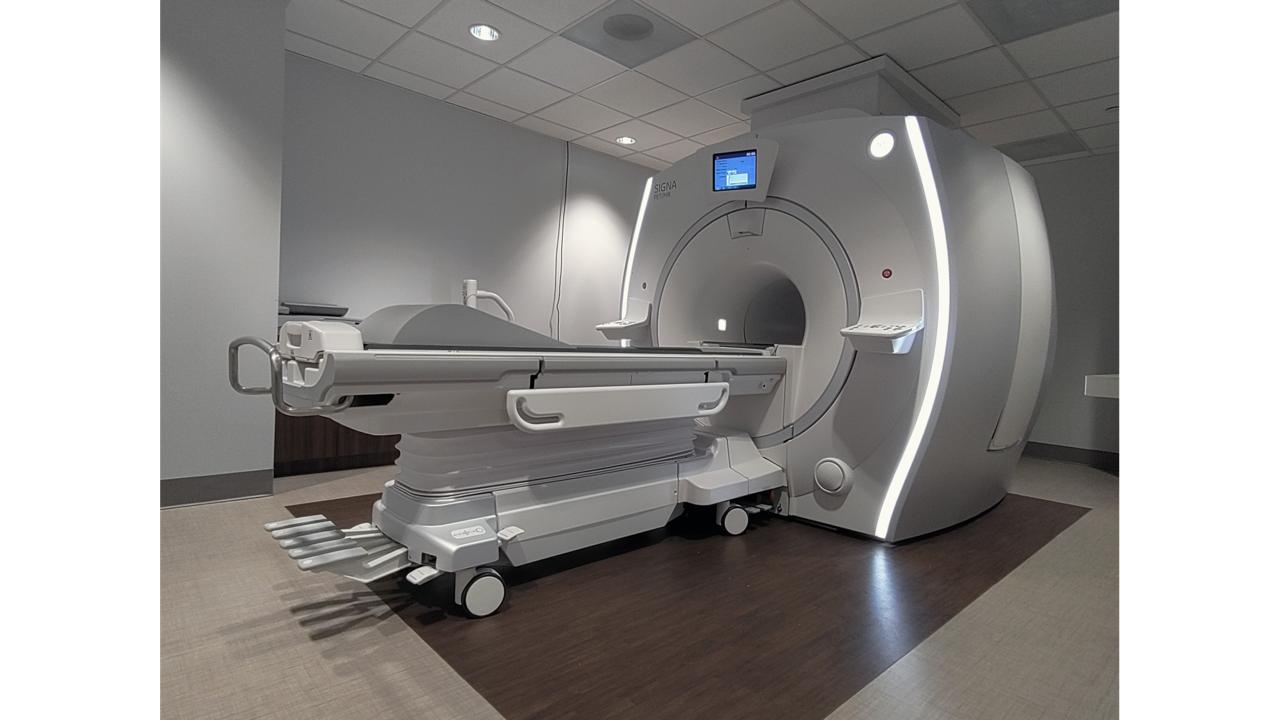
Practical considerations, risk points, and what to ask before you buy, service, move, or maintain imaging equipment.
Target Keyword Phrase: refurbished MRI scanner GE Siemens Philips comparison
If you’re in the market for a refurbished MRI scanner, one of the first decisions you’ll face is brand: GE, Siemens, or Philips. Each manufacturer has built a loyal following in the radiology world, and for good reason — all three produce high-quality, clinically capable systems. But when it comes to the refurbished MRI market, the calculus shifts. Factors like parts availability, service support infrastructure, software upgrade paths, and resale value become just as important as raw image quality.
This guide breaks down the real-world differences between GE, Siemens, and Philips refurbished MRI scanners so you can make a confident, informed decision for your facility.
Why Brand Matters More in the Refurbished Market
When you buy new, the manufacturer’s support network backstops most of your risk. When you buy refurbished, you’re buying a system that’s typically 5–15 years into its life cycle. That means:
- Parts sourcing depends on what’s still being manufactured or stocked in the secondary market
- Software support may be limited to older releases
- Service engineers need brand-specific training that varies widely in availability
The brand you choose shapes your long-term operating costs far more than the purchase price alone.
GE Healthcare MRI Scanners
GE is the dominant force in U.S. MRI installations, which has significant downstream benefits for refurbished buyers.
Strengths:
- Largest installed base in North America — more systems in the field means more parts available, more trained engineers, and more competitive service pricing
- SIGNA platform has been consistently updated across generations, so many older systems can receive meaningful software upgrades
- Strong resale value — GE systems hold their value well, which matters if you plan to upgrade in 5–7 years
- Coil compatibility is generally well-documented, making it easier to source replacement coils (one of the highest-cost consumable items in MRI)
Common Refurbished Models:
- GE SIGNA Explorer / Voyager (1.5T) — workhorses for general radiology and outpatient centers
- GE SIGNA Artist (1.5T) — newer generation with AI reconstruction capabilities
- GE SIGNA Premier (3T) — premium research and academic tier
Considerations:
- OEM service contracts from GE can be expensive; third-party ISOs (independent service organizations) are widely available and often significantly cheaper
- Some older SIGNA platforms (pre-HDx) have limited upgrade paths
Best for: High-volume outpatient imaging centers, rural hospitals, facilities in LATAM/Caribbean where GE service infrastructure is well-established
Siemens Healthineers MRI Scanners
Siemens has a reputation for engineering precision and consistently high image quality, particularly at 3T. Their MRI portfolio is deep, and the refurbished market reflects strong demand.
Strengths:
- Tim (Total imaging matrix) technology — available on MAGNETOM Avanto, Espree, and Skyra — provides excellent image quality with flexible coil configurations
- MAGNETOM Skyra and Prisma (3T) are among the most sought-after platforms in academic and research settings
- syngo software platform is intuitive and well-regarded by radiologists, which reduces workflow friction
- Wide bore options (MAGNETOM Espree, Amira) are popular for bariatric and claustrophobic patient populations
Common Refurbished Models:
- Siemens MAGNETOM Avanto (1.5T) — reliable general-purpose workhorse
- Siemens MAGNETOM Espree (1.5T, 70cm wide bore) — excellent for patient comfort
- Siemens MAGNETOM Skyra (3T) — high-end research and advanced neuroimaging
Considerations:
- Parts can be more expensive than GE equivalents, particularly for older MAGNETOM generations
- Siemens service contracts tend to price at a premium; budget accordingly if you’ll rely on OEM support
- Export of certain Siemens systems may require additional documentation, relevant for LATAM and Caribbean buyers
Best for: Facilities prioritizing image quality and workflow, academic medical centers, facilities with existing Siemens service relationships
Philips Healthcare MRI Scanners
Philips occupies a strong third-place position in MRI market share but has a devoted user base — particularly in neurology and cardiac imaging. Their refurbished systems represent excellent value, especially for buyers who prioritize dStream digital broadband technology.
Strengths:
- dStream architecture (available on Ingenia and Ambition platforms) dramatically reduces image noise and is a genuine technical differentiator
- Philips Ingenia Ambition with BlueSeal magnet technology operates without liquid helium, which is a major operational advantage — no helium top-offs and significantly lower siting requirements
- Elition and Ingenia platforms are strong performers at 1.5T and 3T
- Philips has invested heavily in cardiac and neuro MRI, and their systems perform exceptionally in those subspecialties
Common Refurbished Models:
- Philips Achieva (1.5T and 3T) — highly capable, widely available in the refurbished market
- Philips Ingenia (1.5T and 3T) — newer generation with dStream technology
- Philips Ingenia Ambition (1.5T) — helium-free operation, growing popularity
Considerations:
- Smaller installed base than GE means fewer independent engineers trained on Philips systems in some regions — especially LATAM
- Parts availability for older Achieva generations is adequate but narrower than GE
- Coil library upgrades can be costly
Best for: Facilities focused on neurology, cardiac imaging, or advanced research; buyers who want a technically differentiated system at a competitive refurbished price
Side-by-Side Summary
| Factor | GE | Siemens | Philips |
|---|---|---|---|
| Parts Availability | ★★★★★ | ★★★★☆ | ★★★☆☆ |
| ISE/Third-Party Service Network | ★★★★★ | ★★★★☆ | ★★★☆☆ |
| Image Quality (1.5T) | ★★★★☆ | ★★★★★ | ★★★★★ |
| Image Quality (3T) | ★★★★☆ | ★★★★★ | ★★★★★ |
| Resale Value | ★★★★★ | ★★★★☆ | ★★★☆☆ |
| LATAM/Caribbean Support | ★★★★★ | ★★★☆☆ | ★★☆☆☆ |
| Wide Bore Options | ★★★☆☆ | ★★★★★ | ★★★★☆ |
| Helium-Free Option | ✗ | ✗ | ✓ (Ambition) |
Questions to Ask Before You Buy
Regardless of brand, these questions should guide your refurbished MRI purchase:
- What is the system’s magnet history? Has it ever quenched? How many helium fills has it had?
- What software version is it running? Can it be upgraded, and at what cost?
- What coils are included? Coils are expensive — a full coil set adds real value
- Who will service it? Do you have access to OEM or qualified third-party engineers in your region?
- What is the full delivery scope? De-installation, rigging, shipping, site prep, installation, and applications training should all be accounted for
The Bottom Line
There is no universally “best” brand — the right choice depends on your clinical workflow, service infrastructure, geography, and budget. GE wins on parts availability and total cost of ownership for most buyers, especially in LATAM and the Caribbean. Siemens is the premium engineering choice, particularly at 3T. Philips offers genuine technical innovation and strong subspecialty performance, with the Ambition’s helium-free design worth serious consideration for facilities in remote or infrastructure-limited locations.
Talk to Medical Imaging Specialists
At Medical Imaging Specialists, we’ve been placing refurbished MRI systems across the U.S., Caribbean, and Latin America since 2004. We stock and source GE, Siemens, and Philips systems at multiple field strengths, and we can walk you through the real-world trade-offs for your specific facility — not just the spec sheet.
Whether you’re looking for a reliable 1.5T workhorse or a high-performance 3T system, our team has the experience to match you with the right equipment and back it up with parts and service support.
Contact Medical Imaging Specialists today to discuss your MRI needs and get a no-pressure quote.
📞 Call us or visit medicalimaging.com to get started.
Related Reading
- Read next: Refurbished Mri Scanner Buying Guide
- Read next: 1 5T Vs 3T Refurbished Mri Field Strength Guide
Talk Through Your Next Imaging Project
If you are evaluating refurbished imaging equipment, planning a service strategy, or trying to keep an aging scanner productive, Medical Imaging Specialists can help. Contact MIS through the website and tell us what system you are working with.
Need help with this exact problem?
Send the modality, site location, timeline, and any system details. MIS will route the request by intent.
Related resources
Buyer's Desk
What Is a Fair Price for Used X-Ray Equipment?
A fair used X-ray equipment price depends on scope, detector condition, site readiness, installation, service, parts, and support.
Buyer's Desk
How Much Does Used Medical Imaging Equipment Cost?
Used medical imaging equipment cost depends on modality, model, condition, site work, installation, service, parts, and support scope.
Buyer's Desk
Best Used MRI for an Outpatient Imaging Center
Choose the right used MRI for an outpatient center by matching field strength, bore size, coils, site needs, service, and volume.