
Buyer's Desk
Refurbished PET/CT Scanner Buying Guide: What to Know Before You Buy
March 29, 2026 · 6 min · Medical Imaging Specialists
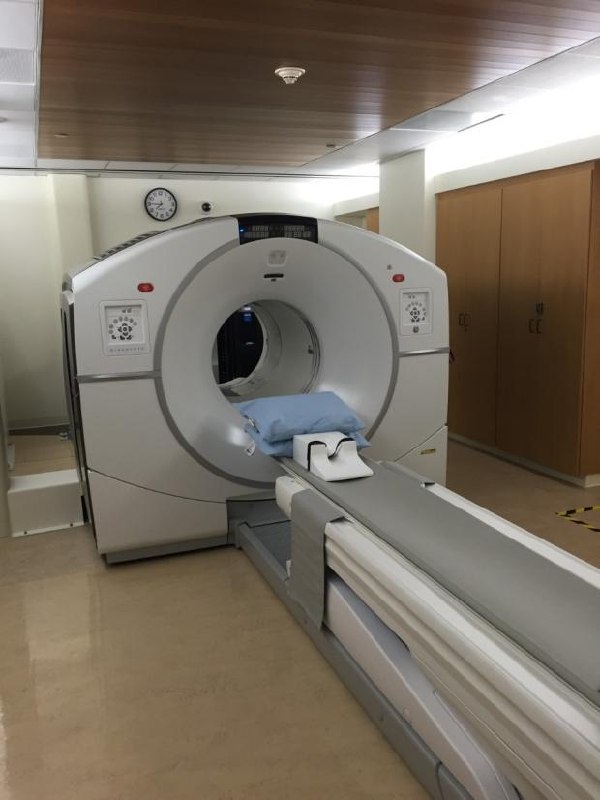
Practical considerations, risk points, and what to ask before you buy, service, move, or maintain imaging equipment.
PET/CT systems sit at the top of the complexity ladder in diagnostic imaging. They combine two entirely different technologies — positron emission tomography (PET) and computed tomography (CT) — into a single scanner that delivers both metabolic and anatomical data in one exam. That complexity makes them expensive new, and it makes buying refurbished feel riskier than it actually needs to be.
Done right, a refurbished PET/CT purchase can save your facility between 40% and 60% compared to new — without compromising clinical performance. Done wrong, it can saddle you with a scanner that spends more time down than it does imaging patients.
This guide walks you through everything you need to know before buying a refurbished PET/CT system.
What Does a Refurbished PET/CT Actually Cost?
New PET/CT systems from major OEMs — GE HealthCare, Siemens Healthineers, and Philips — typically run $1.5M to $3M or more, depending on configuration and detector technology. The refurbished market brings that range down significantly:
- Entry-level refurbished PET/CT (older BGO detector systems, 16-slice CT): $250,000–$500,000
- Mid-range refurbished PET/CT (LSO/LYSO detectors, 40–64-slice CT): $500,000–$900,000
- Premium refurbished PET/CT (recent vintage, 64+ slice CT, high sensitivity detectors): $900,000–$1.4M
These figures are for the scanner itself. Add site preparation, de-installation and shipping, installation, acceptance testing, and your service contract, and you’re typically looking at 20–30% on top of equipment cost for total project budget.
Key Specifications to Evaluate
Not all PET/CT systems are equal. Here’s what to compare when reviewing options:
PET Detector Technology
This is arguably the most important spec. Older systems used BGO (bismuth germanate) detectors. They work, but they have lower sensitivity and slower timing resolution than modern alternatives.
Newer systems use LSO (lutetium oxyorthosilicate) or LYSO crystals. These offer:
- Higher sensitivity (more counts per MBq)
- Better time-of-flight (TOF) performance
- Faster scan times
- Improved image quality at lower tracer doses
If patient throughput and image quality are priorities, prioritize LSO/LYSO-equipped systems even in the refurbished market.
Time-of-Flight (TOF) Capability
TOF is a technique that uses the precise timing difference between coincident photons to better localize annihilation events. Systems with TOF produce sharper, less noisy images — especially important in heavier patients and in oncology protocols.
TOF was introduced commercially in the mid-2000s and has been refined significantly since. When evaluating a refurbished system, ask specifically whether it supports TOF and at what timing resolution (measured in picoseconds — lower is better).
CT Slice Count
The CT component matters too. A 16-slice CT provides adequate attenuation correction and anatomical localization but limits your diagnostic CT capability. A 64-slice or higher CT component opens the door to dedicated CT diagnostic reads and advanced cardiac protocols.
For a standalone PET/CT center focused purely on oncology, a 16- or 40-slice CT may be entirely sufficient. For a multispecialty outpatient center, a higher-slice CT may justify the additional investment.
Axial Field of View
Standard PET axial FOV is 15–22 cm. Longer FOVs mean fewer bed positions per scan, which means faster exams and better patient throughput. Some newer systems have dramatically extended FOVs (up to 2 meters), but these remain rare in the refurbished market.
Vendor and System Age Considerations
The major OEM platforms you’ll encounter in the refurbished PET/CT market:
GE HealthCare (Discovery series): The Discovery 600, 690, and MI are commonly available refurbished. GE systems tend to have good parts availability, a strong service ecosystem, and wide clinical adoption in the US.
Siemens Healthineers (Biograph series): The Biograph mCT and Biograph TruePoint are frequently traded in the refurbished space. Siemens offers excellent TOF performance on mid-generation systems and strong software capabilities.
Philips (Gemini and VEREOS series): The Gemini TF and TF Big Bore are solid refurbished options. Philips has solid TOF implementation and is known for its iterative reconstruction software.
When evaluating a specific unit, age matters — but vintage alone doesn’t tell the full story. A well-maintained 8-year-old system with documented service history and recent PM work may be a better buy than a newer system with incomplete records.
Site Requirements: What You Need Before the Scanner Arrives
PET/CT installations are among the most demanding in medical imaging. Plan accordingly:
Radiation shielding: PET imaging uses 511 keV gamma rays — significantly more penetrating than standard X-ray or CT. Room shielding calculations must be performed by a qualified medical physicist and are typically more substantial than for CT alone. Budget for a shielding survey early in the planning process.
Radiopharmacy access: You need a reliable supply of FDG (and potentially other radiopharmaceuticals). This means either proximity to a regional cyclotron/radiopharmacy or an on-site dose calibrator and delivery arrangement. Confirm your supply chain before you commit to a scanner.
Electrical and HVAC: PET/CT systems require dedicated electrical service (typically 208V three-phase), significant cooling capacity, and precise temperature and humidity control for the detector electronics. Work with your vendor to get exact site specs early.
Licensing and regulatory compliance: PET imaging involves radioactive materials. You’ll need appropriate NRC or Agreement State licenses (or an authorized user arrangement), a Radiation Safety Officer, and a written radiation protection program before your first patient.
What to Ask Your Vendor
Before signing a purchase agreement on a refurbished PET/CT, get clear answers on:
- What is the documented service history? Ask for logs, not just verbal assurances.
- Has the system passed a recent PM? Request the PM report.
- What is the current detector sensitivity? Ask for a recent normalization and calibration report.
- What is the CT tube mAs count? High-use CT tubes may need replacement soon after purchase.
- Is software under a current OEM license, and can it be transferred?
- What is included in the purchase — gantry only, or full system with workstations and injector?
- Who is responsible for de-installation, shipping, and reinstallation?
- What warranty or post-installation service is available?
The Case for Refurbished PET/CT
For community oncology programs, outpatient imaging centers, and health systems in cost-constrained markets — including LATAM and Caribbean facilities — refurbished PET/CT delivers a compelling value proposition. Modern clinical protocols don’t require the latest silicon photomultiplier detector systems to generate clinically meaningful images. A well-maintained GE Discovery 600 or Siemens Biograph mCT can support a full oncology imaging program at a fraction of new equipment cost.
The key is working with a vendor who knows these systems at a deep technical level — not a broker who moves boxes.
Ready to Explore Your Options?
Medical Imaging Specialists has been buying, refurbishing, and supporting PET/CT, CT, and MRI systems since 2004. We carry in-house parts inventory, employ experienced in-house engineers, and provide full service support — including installation, acceptance testing, and ongoing service contracts.
If you’re evaluating a refurbished PET/CT purchase, we’d welcome the conversation. Contact Medical Imaging Specialists to discuss your clinical requirements, budget, and timeline. We’ll tell you straight what makes sense for your situation.
Related Reading
- Read next: Ge Vs Siemens Refurbished Pet Ct Scanner Comparison
- Read next: Refurbished Vs New Medical Imaging Equipment
Talk Through Your Next Imaging Project
If you are evaluating refurbished imaging equipment, planning a service strategy, or trying to keep an aging scanner productive, Medical Imaging Specialists can help. Contact MIS through the website and tell us what system you are working with.
Need help with this exact problem?
Send the modality, site location, timeline, and any system details. MIS will route the request by intent.
Related resources
Buyer's Desk
What Is a Fair Price for Used X-Ray Equipment?
A fair used X-ray equipment price depends on scope, detector condition, site readiness, installation, service, parts, and support.
Buyer's Desk
How Much Does Used Medical Imaging Equipment Cost?
Used medical imaging equipment cost depends on modality, model, condition, site work, installation, service, parts, and support scope.
Buyer's Desk
Best Used MRI for an Outpatient Imaging Center
Choose the right used MRI for an outpatient center by matching field strength, bore size, coils, site needs, service, and volume.